Use cases
What neighbours actually use it for
Six everyday situations, and what changes when someone drops a pin instead of grumbling to a friend.
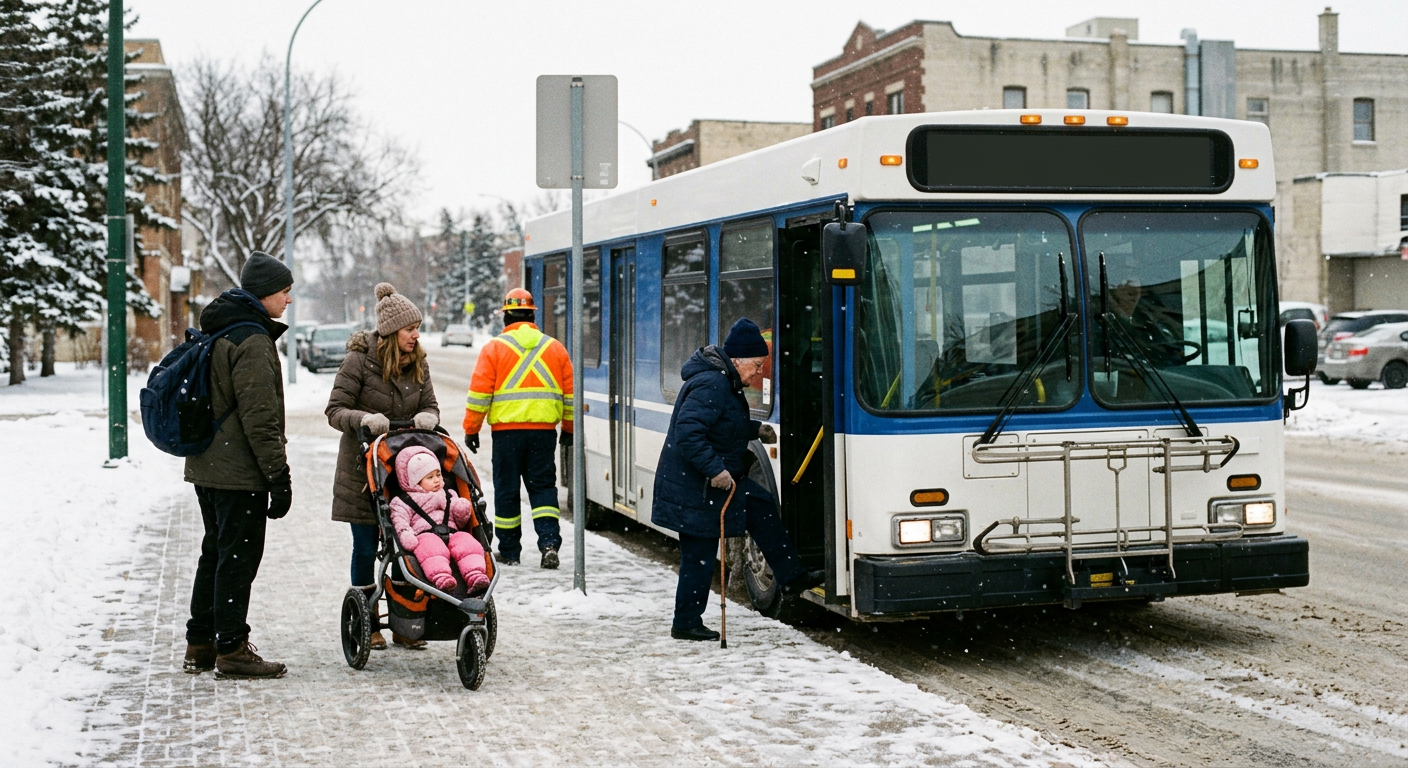
- Missing stop
The stop that is a ten-minute walk too far
A seniors’ residence sits 700 metres from the nearest stop, and the sidewalk is icy for half the year. Residents know exactly where a stop would help. Nobody has asked.
- What you do
- Drop a pin where the stop should be and say who it would serve.
- What happens next
- Neighbours back it, and the pin shows up as demand on the hotspots map.
- Shelter
A shelter where the wind never stops
On an exposed corner, a ten-minute wait at minus thirty feels endless. A shelter can turn a dreaded wait into a bearable one.
- What you do
- Nominate the spot as a place where a shelter is needed and say what makes it exposed.
- What happens next
- Support grows from people who use that stop, with a confidence label planners can read.
- Route change
The route that stops before the shift ends
A hospital worker finishes at 11:30 pm, but the last bus leaves at 11:10. The route exists. The hours do not fit.
- What you do
- Open the route, choose Suggest a change and describe what should be different.
- What happens next
- The suggestion stays attached to that real route, so planners see which change many people want.
- Problem
A transfer that fails by two minutes
Two routes meet at a hub, but one leaves just before the other arrives. Everyone who transfers there loses twenty minutes.
- What you do
- Report a problem at the hub, naming the routes and the time.
- What happens next
- Repeated reports from different people turn one complaint into a visible hotspot.
- Your language
Reporting in your own language
Many newcomers know their commute better than anyone, and are rarely asked in English. TransitCrafter works in 11 languages, including right-to-left Arabic.
- What you do
- Switch language at the top of any page and report the way that is comfortable.
- What happens next
- Support is counted per person, so every language carries the same weight.
- Community groups
A neighbourhood association with one clear ask
A residents’ association wants a better connection to the university. Instead of a petition nobody reads, they share a single idea page.
- What you do
- Post the idea, share its link and invite members to back it.
- What happens next
- Support from several neighbourhoods over time is what moves an idea to Strong.
These scenarios are illustrative examples of common requests, not individual reports.
Got something transit should fix?
It takes about thirty seconds. No account, no name.
Keep exploring
- How it worksThe full journey, from a pin on the map to evidence on a planner’s desk.
- For plannersCounted, located and labelled demand, with the method and the data open.
- Trust & safetyThe checks that keep the map honest, and what happens when something goes wrong.
- PrivacyWhat we store, what we never do, and how long anything is kept.
- AboutWhy this exists and who it is for.
- ContactQuestions, bugs or ideas for the people who build this.